International Women’s Day week feels like the right moment to talk about inspirational mudders.
Because when a team of disabled and non-disabled runners line up at a Tough Mudder start line, it’s not just about crawling through mud pits and voluntarily flirting with hypothermia. It’s about showing, loudly, joyfully, and slightly shiveringly, what real inclusion looks like when everyone moves together.
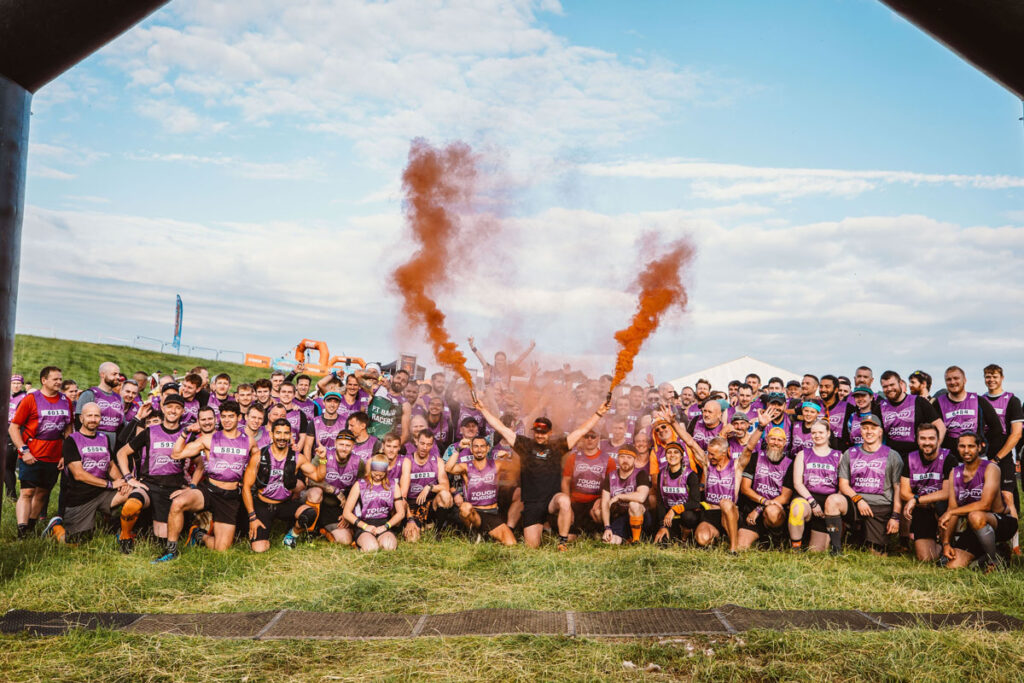
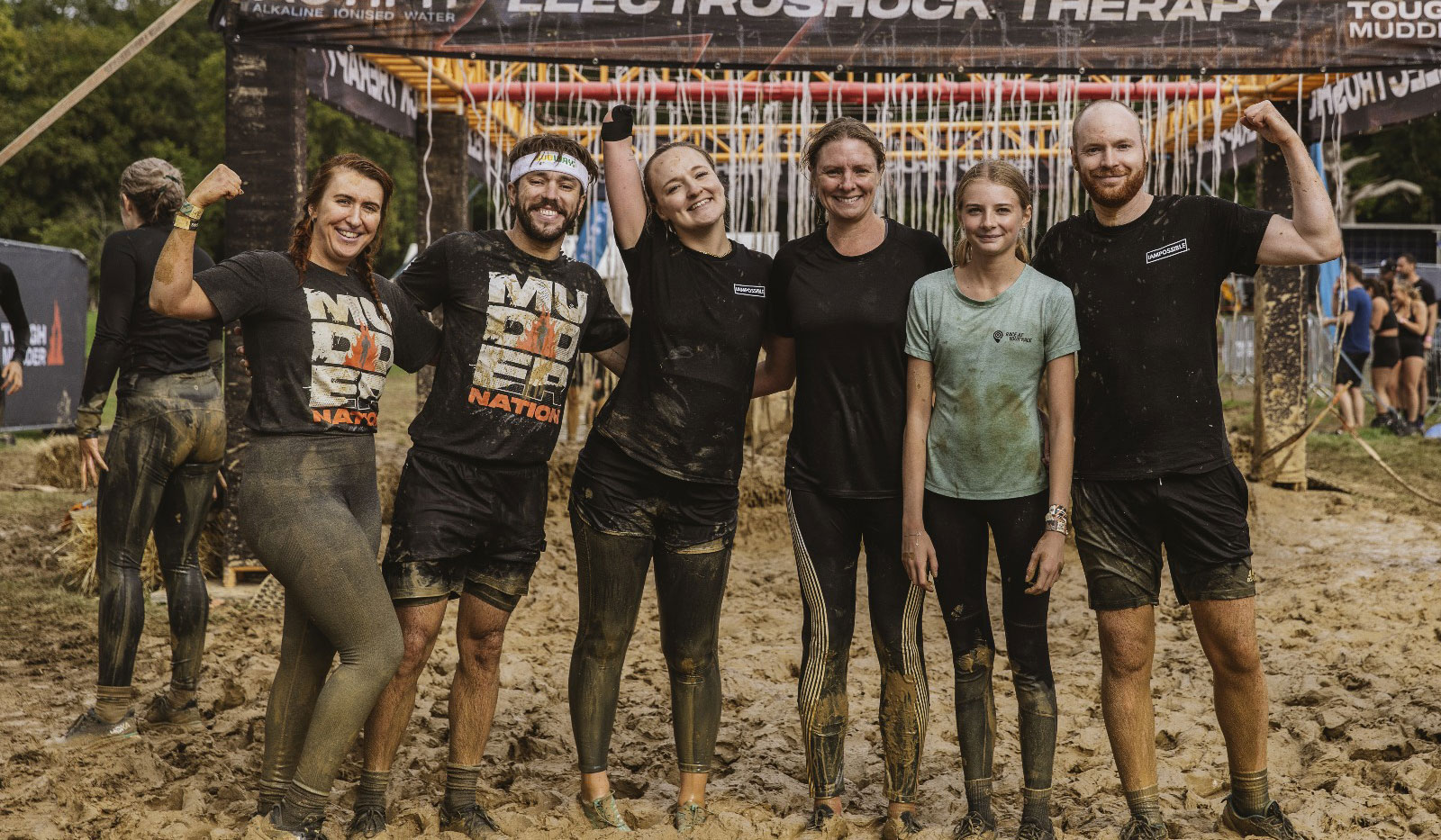
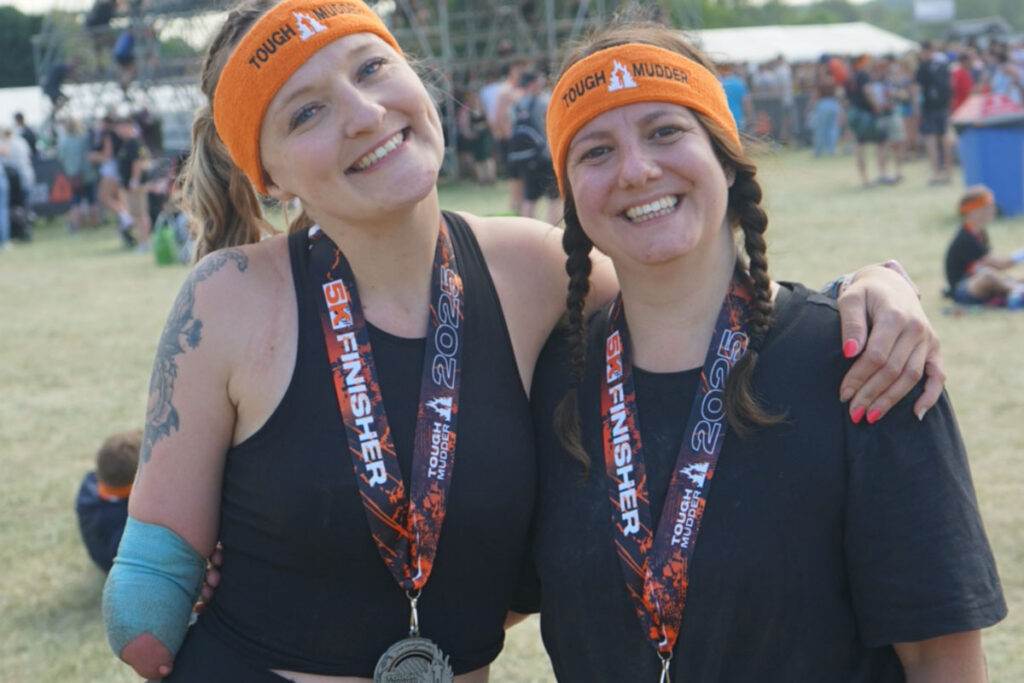
Meet the IAMPOSSIBLE crew. A mix of limb-different and non-disabled Mudders brought together through the community and work at IAMPOSSIBLE. They didn’t sign up to be inspirational wallpaper. They signed up because inclusion isn’t a panel discussion. It’s something you practice. Ideally while knee-deep in mud.
Convincing the team to do it? Easy.
Deciding who was responsible for snacks? A diplomatic incident.
IAMPOSSIBLE team leader Nicole, explains what drove their team’s Tough Mudder experience.
Why We Ran (No, Not for a Medal Selfie)
We didn’t fundraise. We ran to embody the mission.
IAMPOSSIBLE is rooted in lived experience. We support the limb difference community, challenge tired narratives around disability, and push for access that isn’t an afterthought. Running Tough Mudder as a team was our way of saying: disabled people are strong, capable, and absolutely belong in every space—including the ones built around ice baths and electric wires.
For some of us, it was our first Mudder. For others—like our founder, who ran her first one seven years ago—it was unfinished business. Apparently once just wasn’t enough. Some people collect medals. We collect muddy ones.
Training: Choose Your Fighter
Our preparation was… varied.
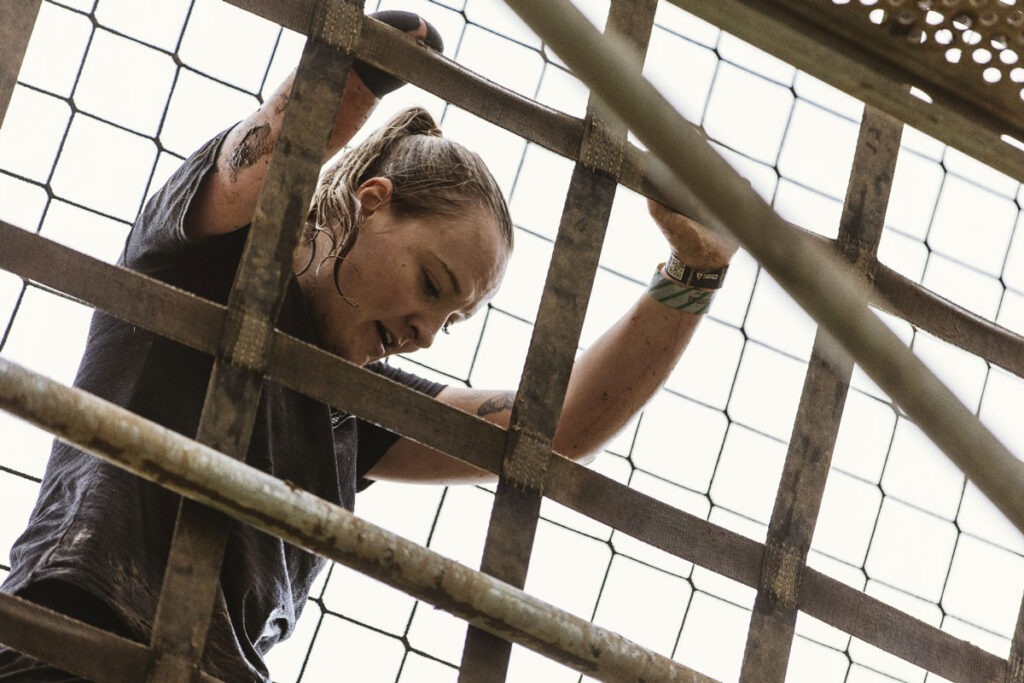
Some went to full structured gym sessions and para-taekwondo drills. Others trained via advanced parenting logistics, commuter sprints, and the fine art of carrying prosthetic limbs up and down stairs without launching them into orbit. Everyone showed up ready in their own way.
That’s the thing about inclusion: there isn’t one template. There’s just commitment.
The Obstacles: A Love Letter to Teamwork (and Mild Regret)
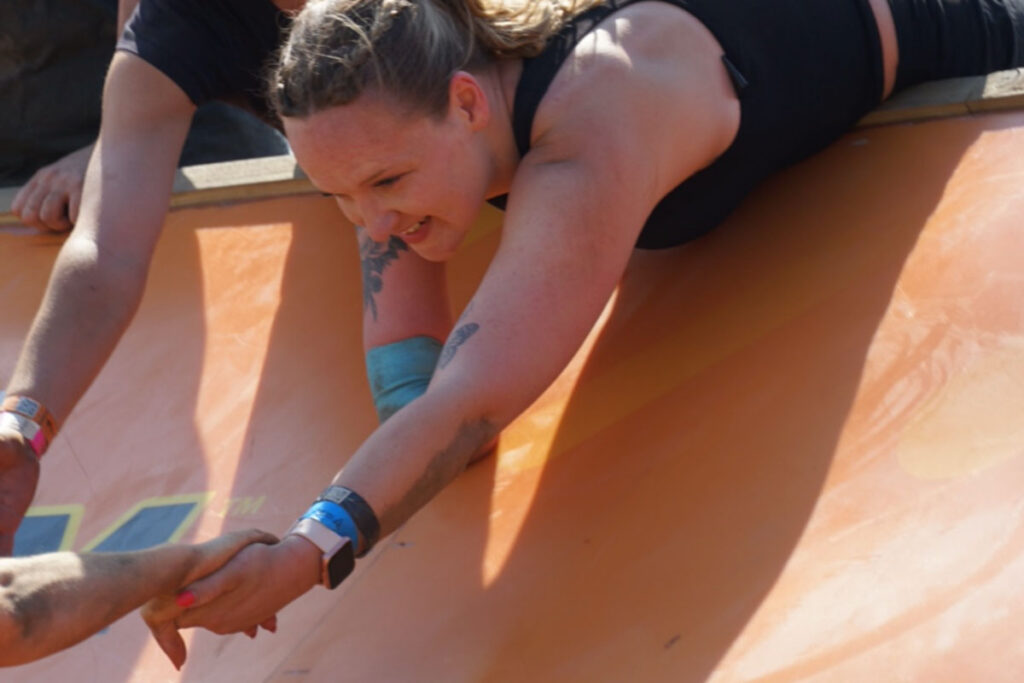
The ones we were most excited for? Anything that demanded teamwork. Those giant rolling cylinders in the water (AKA Blockness) where you either coordinate beautifully or baptise each other repeatedly were a favourite. Watching disabled and non-disabled teammates lift, pull, anchor, and adapt in real time? That’s inclusion in motion. No buzzwords. Just bodies figuring it out together.
Biggest anticipated challenge? Grip strength. Cold water. Physics behaving unpredictably. You know, the usual.
Unexpected nemesis? The infamous “Arctic Enema” situation. A brave subset of the team entered. They emerged spiritually altered. It knocks the air out of you in a way that feels personal.
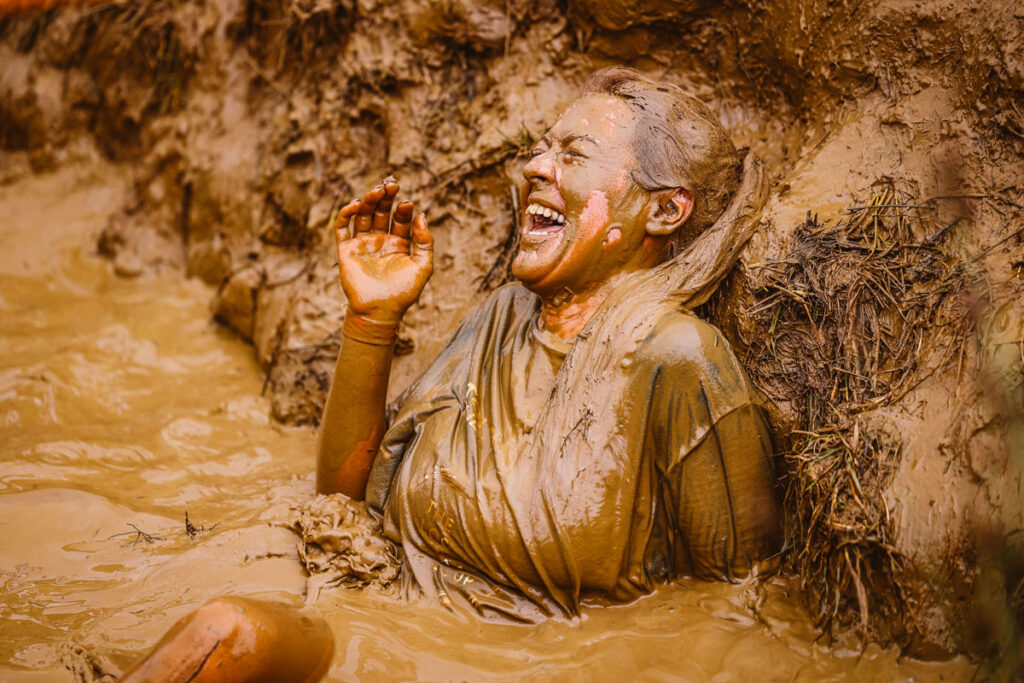
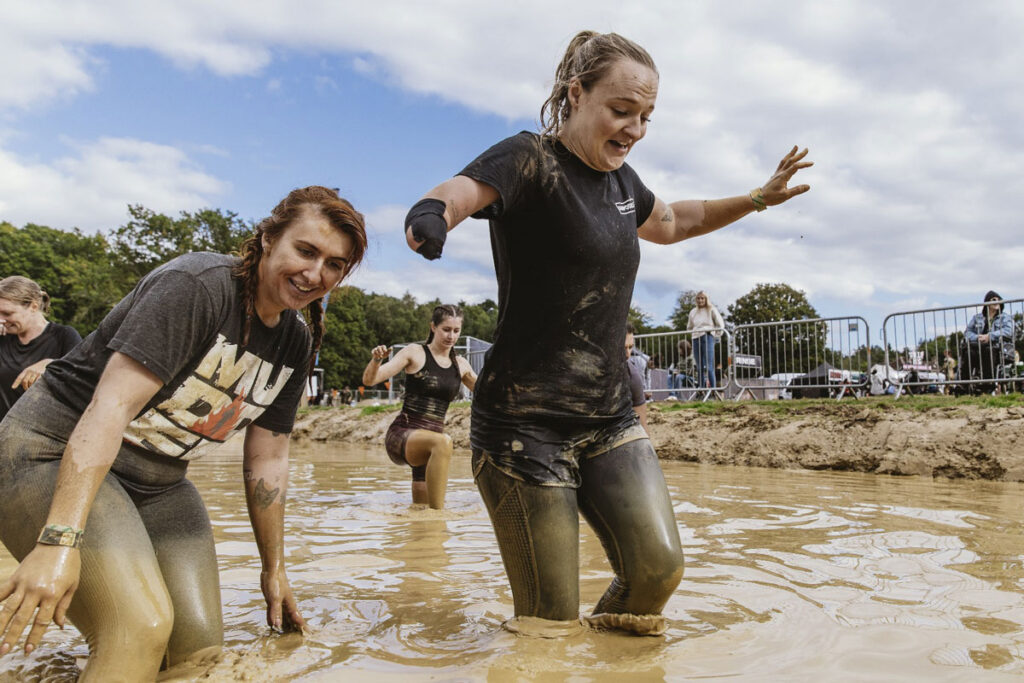
Superhero moment? The army crawl. There’s something cinematic about dragging yourself forward through mud like you’re in a slow-motion action sequence—except instead of dramatic lighting, you have a mouthful of earth.
Post-Mud Truths
Who surprised themselves? Every single one of us.
Tough Mudder has a way of revealing the quiet doubts you didn’t realise you were carrying—and then replacing them with, “Oh. I can actually do this.” Each person fought a different battle: electrocution nerves, monkey bar mind games, steep hill negotiations with gravity. But no one faced it alone.
Next-day soreness? Solid “please do not make me climb the stairs.”
Graceful fall or sack of laundry? Laundry. Absolutely laundry. There were bags of washing involved. Industrial levels.
If our Mudder performance were a film? Access Granted: The Mud Edition.
And yes, every single one of us is already talking about the next one. Because once you’ve experienced that level of collective grit, it’s addictive.
The Bigger Picture (Because This Is Bigger)
For International Women’s Day, this matters.
Disabled women are too often underestimated, over-looked, or told to stay on the sidelines. The Tough Mudder women’s community is proof that we don’t wait for permission, we build space for each other and drag one another (lovingly) over obstacles when needed.
Representation isn’t symbolic when it’s muddy and breathless and real. It’s practical. It’s powerful. It’s contagious.
When access and attitude align, disabled people don’t just participate, we thrive. Even in spaces never designed for us.
And yes, we left with a renewed appreciation for dry socks. Growth comes in many forms.
Three Words?
Community.
Strength.
Mud.
And maybe a fourth: POSSIBLE